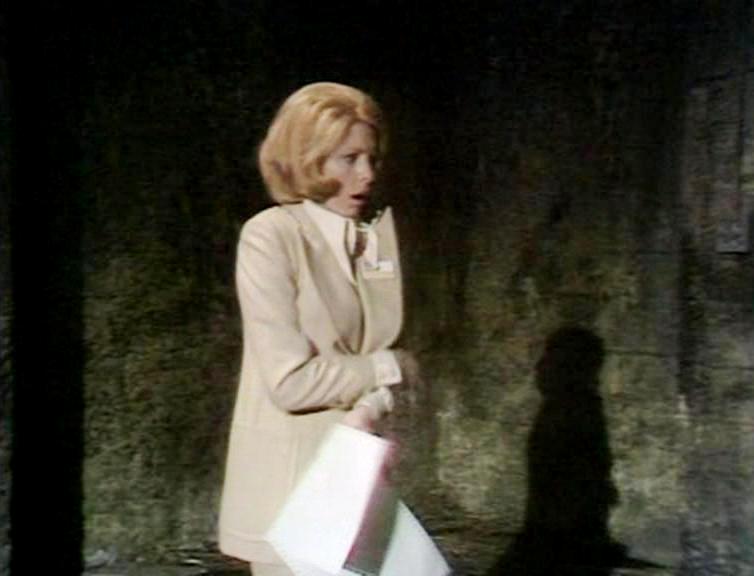
" ... an empty house is an admirable field for the operations of the imagination ..."
-- from "The Haunted Vicarage," by Emeric Hulme-Beaman

British Library, 2025
244 pp
hardcover
Ever since Valancourt Books put out its first book of Victorian Christmas Ghost Stories, reading ghostly tales for the holidays has become a personal tradition. Now, just in the nick of time—Saint or Old, your choice—for this 2025 Christmas season, I dove into the latest entry in the British Library’s Gilded Nightmares series, Illusions of Presence: Lost Christmas Ghost Stories, edited by Johnny Mains. Known for his knack for unearthing wonderfully obscure tales, Mains pulls from a wide range of old, forgotten sources here, and the result is pure reading pleasure. Rather than sticking to the familiar seasonal standbys (near and dear to my heart though they may be), this collection offers stories reprinted here for the first time, steeped in that irresistible combination of Christmas warmth and the quiet, uncanny sense of dread that I so enjoy.
Before I get going here with my purely reader's thoughts, if you would care more for a professional review, there's one here by Tim Prasil, who also knows his way around obscure stories and ghostly tales.
Every story in the collection comes with a short but highly-informative introduction to its author, complete with context about where and how the tale first appeared. This volume definitely passes my does-the-first-story-convey-the-tone-of-what's-to-come test, with "In Deadly Peril: A Strange Christmas Story of Mining Life," by John Pendleton (1853 - 1914). From 1887, it's a fine opener -- dark, eerie, and claustrophobic all at once—offering an immediate plunge into the anthology’s unsettling atmosphere. A dramatist in search of a “strong situation” for his new play, ventures into a coal mine on Christmas Eve. He’s warned he’s chosen a “strange day” for such an expedition and told it’s “not too late to turn back.” Christmas Eve, it seems, is unlucky in this pit—but he laughs it off as mere “nonsense.” Yet as the mine’s shadows deepen and the cold seeps in, it becomes clear that some warnings are best heeded…
From there, we move indoors for the most part, inside of houses that have seen too much and where the past lingers in the corners but has a way of making itself known. "The Ghost at the Red Farm" by Mabel Collins (1892) first sends us into haunted house mode. Young Lucy Fielding has grown up motherless at the Red Farm, sheltered from almost all human contact—especially men. So when her father suddenly asks her to prepare a room for an older male visitor, the request unsettles her in a way she can’t quite name. Her unease deepens as the guest stays longer than expected, and she notices the subtle shift in her father—his usual good nature replaced by a “manifestly uneasy” tension. Despite the unease, Lucy finds herself drawn to him, caught in a mix of fear and “awestruck admiration.” Then comes the chilling proposal: he asks her to marry him. But her father’s warning, spoken on his deathbed, hangs over the tale like a dark shadow, and to quote something I recently heard on British TV, Bloody Norah! The ending of this story is evidently unending, when all is said and done. Just plain creepy this one, as is “The Haunted Vicarage” (1903) by Emeric Hulme-Beaman (1864–1937). The vicar at Walford invites his old friend Marsden to visit his home. When the conversation turns to the house being less than ideal for a bride—despite its “recommendations for domestic comfort”—Marsden is initially taken aback. That was, of course, before he witnessed firsthand (and not forewarned!) the eerie happenings that have troubled the vicar since his arrival.
 |
| from Love to Know |
Further hauntings plague the inhabitants of various houses in "Nights of Terror" (1913) by E.J. Thomas, "The Ghost of Moor Hall" (1925) by M.E. Murray and then there's "The Malignant Thing: A Christmas Eve Ghost Story" (1928) by Vincent Cornier which begins with three men sitting by a blazing fire discussing the "pet spook" that lives in the host's (Summerson's) house. One of the men, Petersham, declares that he only requires “one proof” of the house being haunted, promising a donation to a charity of the host’s choice if it can be shown. Meanwhile, the third, a professor, pleads—“for the sake of two souls”—that their host refuse the offer altogether. It seems that whatever has been lingering unseen yet present in the house has caused an entire wing to be closed, and that this "malignant thing ... a thing of Hell, a demon, a spectre, a shadow..." has been terrorizing people for well over two hundred years. But a bet is a bet. Then it's the eerie“The Spectre Bridegroom” by Mrs. Gordon Smythies (1884), followed by Bessie May Tobin-Montague’s “A Christmas Ghost Story” (1901), set during a Christmas hunting party at an inherited country house complete with gargoyles and a bordering Black Swamp. Everything begins pleasantly enough—fires lit, guests assembled—until the hostess starts seeing and feeling things no one else can. Naturally, whispers follow, and both her guests and her husband begin to wonder whether the problem lies with the house…or with her mind. I found this one especially well done, its slightly off-kilter events setting it a bit apart from the rest of the collection. Even darker is “The Lady of the Mistletoe: A Christmas Ghost Story” by Mary Hall (1902), told from the retrospective point of view of Tom Derston as he recalls a fateful Christmas house party hosted by himself and his wife, Ellice. Their country home—Derston Hall—once belonged to an elderly relative whose presence still seems to cling to the place. One thing missing from the holiday decorations is mistletoe, which (and I won't divulge why) they were told was a good thing. Unfortunately, an invited guest is unable to attend and instead sends along “a mass” of the stuff. That gift is the beginning of a strange unraveling. Rich in atmosphere, heavy with supernatural menace, and just a little unhinged, this tale was so much fun to read. May Wynne's "The Ghost of Cheldon Court: A Christmas Ghost Story," from 1924, starts two days before Christmas, and gambling man Jack's wife Mollie makes him swear that he'll be back to spend time with her and their children on Christmas Eve. Jack has resolved to leave by eleven that night, but best laid plans and all that. While he and the men he is with are trying to figure out something fun to do, one of them comes up with the idea of spending a night at Cheldon Court. As one of Jack's cronies says, he'll "lay a thousand to eight against any man spending the night tonight in that haunted room." Despite the horrific things he's told about people who've done it before, Jack decides he'll take the bet.

Leaving the haunted houses behind, we have five more tales that move outside home and hearth. "The Child Who Had Everything But: A Christmas Ghost Story" by John Kendrick Bangs (1911) is a very different sort of ghostly tale, very likely the most poignant of this anthology, "The Ghost of Appledore Pool or The Iron Chest at the Barnstaple Bar," by JYT (1893) is a fine yarn that begins with two siblings asking their grandmother to tell them a story -- "a real good one, a thorough Christmas story..." Evidently, grandma is a terrific storyteller, because one of the children hasn't been able to forget last's year's ghostly tale. They ask for a "real true one," as well as a ghost story, so she obliges with a tale unsettling enough to satisfy them as well as anyone reading this little piece. Storms, shipwrecks, a lighthouse and of course, ghosts -- who needs any more than that? "That Terrible Dentist" (1880) by an anonymous writer is downright demonic in its own way (hint hint), and while offsetting that experience, more than a bit of tongue-in-cheek humor finds its way into "Claus and Defect by William J. Koen (1927).
Bringing the anthology to a chilling close is “The Shadows of Evil or The Fatal Dream,” another anonymously published tale from 1871—and easily one of my absolute favorites here. Once again, a grandmother is pressed into service at Christmas to provide a ghostly diversion, and the story she chooses is one that held a “great fascination” for her when she was a girl. It comes from a diary written by her father’s aunt, who, in turn, heard it from one of the very people involved. Certain it won’t “trouble the heads” of her grandchildren, she reads it to them, but it turns out to be one of the most disturbing pieces in the entire book, troubling my own head for a while. I can’t help wishing I knew the identity of this anonymous author; I’d hunt down everything they ever wrote without hesitation. This story is truly that good.
While not everyone will love every story, for me the editor's selection of stories for this Christmas ghost-story volume is spot on, and I can only begin to imagine the time and care that went into tracking them down. While they are perfectly suited to the season, they are also first-rate ghost stories that would feel entirely at home in any anthology of ghostly tales from yesteryear. So, if you didn't manage to read this one over the holidays, don't fret-- these stories will rattle your nerves and raise your hackles at any time of year. Very, very highly recommended, especially for those readers who delight in older, darker pleasures.
I loved this book. Absolutely.